
Fake news is nothing new. But, especially during the last presidential election in the United States in 2016, it has become something big. Here are some of the biggest fake news stories around the world over the past few years. “The War of the Worlds”, Orson Welles’ masterpiece, 1938 Before weighing on the most well known fake news in the past few years, let us go back to a significant event that may be considered as one of the first fake news of the contemporary era. During a cold evening of late October 1938, in the United States, an American
Author: idareteam
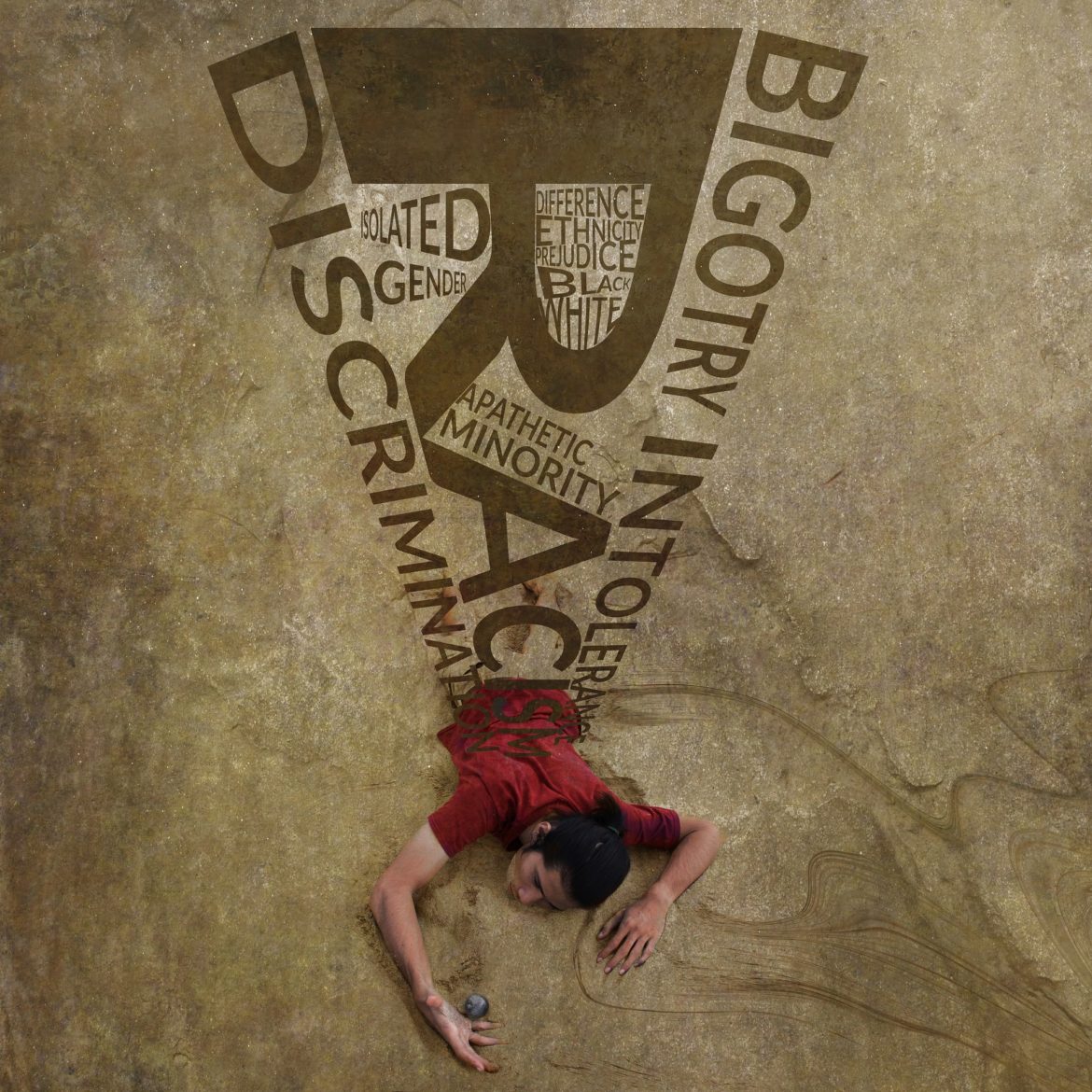
Online Love Speech
What is “Online Love Speech” campaign? It is the first campaign in the MENA region to raise awareness and to mobilize a network of influential in order to combat online hate speech in the region, the first phase of the project and a campaign started from Jordan and the campaign will be targeted to Arabic-speaking countries. What is the “combating online hate speech” campaign? Why do we need to have such a project and campaign? Online hate speech is an old worldwide phenomenon that is getting worse every day with the growing number of social media platforms and the growing number of social

When extreme violence goes out of common places
Today, the language is degraded. Most of our contemporaries fall – not always voluntarily – in common places and platitudes strengthening the one-track thinking. This diversion of language makes it easier to keep the attention of the masses on some social issues. An example illustrated by the concept of violent extremism. On the official website of the Department of Homeland Security of the United States of America, the concept of violent extremism is defined as follows: “individuals who support or commit ideologically-motivated violence to further political goals”[1]. These actions of violence are committed by: “groups and individuals inspired by a

Alternative narratives: a tool to educate and counter the culture of hate
In this globalized and developed world, everything goes faster and faster. The spread of information is eased thanks to social media and online platforms. Is the information always fair and tolerant? No. Indeed, some troublemakers are hiding behind a computer to spread messages of hate and intolerance, propaganda and fake news, under different forms. It became a social phenomenon. These violent data put the world, the youth, the education system and much more in danger. These “speeches of Hate”, are an offend and an attack to a person or a group of people, and it can be very hard to
Kim Noble: Minds challenging minds
As we all know, the world of today is not the world of tomorrow. Every day, new issues come out to challenge our sense of tolerance and respect. But do you think the society of today is ready to handle these questions? We can find the answer online… opening the Facebook, YouTube or Twitter app and reading the comments that people post about everything. The untouchable idea of free speaking “gives” to everyone the freedom to say or comment on what they want when they want and how they want. Being able to have a critical mind and express your

Pacifism in troubled times
“Most analyses of violence in the different historical periods tend to view the modern era as significantly less violent than all of its historical predecessors”, stated Siniša Malešević, a sociologist from the University College of Dublin, in Ireland, a few years ago. This is indeed a common thought to underline that our contemporary societies tend to be less violent compared to ancient times. Such thoughts are based on apparently reliable indicators, as the decrease in homicide rates or the disappearance of public torture, which allowed us to think that our ancestors used to live in a substantially more violent world.

Echo chambers: an old school approach?
Echo chambers: an old-school approach? Echo chambers. For many of us, this is a 21st-century issue were we are extremely connected with media and social networks and, in fact, this is not wrong! In our days, big technology companies are using and developing new ways to collect and analyze our personal information online and track it in order to create an extremely complete profile for each user. Having specific details about your researches, contacts, and personal information are all available online, companies are able to work efficiently in order to reach objectives related to the audience. Part of the practical consequences of

Is happiness mandatory?
Pursuing happiness has been a long-lasting quest throughout the history. In ancient Greek, the original concept of happiness, “eudaimonia”, referred to the good life. Aristotle already suggested that happiness is the only thing that human beings desire for its own sake, unlike wealth, honor or health, for instance. And it is actually, as we can easily observe that we tend to seek richness, honor or health in order to be happy. Whereas, in the eleventh century, the Sufi thinker and philosopher Abu Hamid Muhammad ibn Muhammad al-Ghazali wrote the Alchemy of Happiness, a manual of spiritual instruction. In Roman Catholicism,

Fake news vs. democracy
Rumors, gossips, and falsehoods have always existed: do you remember when a very distant relative told your mother that he had seen you play hooky and it was not true? Or when your neighbors rumored that you used to smoke just because they had seen you hang out with a group of friends who used to smoke? So, in our daily life “fake news” – that in a general meaning are news that are not real, true – have always existed and always caused trouble at school, with our relatives or among friends; by the way, recently, fake news – “stories

“Too Soon”… Limitless of Humor
This year has been significantly rich in episodes of violence associated with humour, and not only related to physical violence. Some people can be highly offended by a joke, but how can we put limits to humour? Because, as Dario Adanti [1] said recently “the humour has limits, but it should not be like that”. It is fair to ensure someone’s right to freedom of expression because we feel offended? The cursive is not casual. Humor is about feelings, not real threats. A joke is never going to hurt physically, though it might cause some “harm” on the emotional level.

Positive peace and the rise of populism in Europe
Political scientist and professor Peter Taggart have lately said that populism is “one of the most widely used but poorly understood political concepts of our time” [1]. Populism by definition is an ideology that has at its core the creation of an “us vs them” mentality, thus dividing the political discourse. “Us” being the people, seen as the morally and ethically superior force to “them”, the elite, portrayed as corrupt, egotistical and deceptive. Populist leaders carefully pick their side, their people, along the lines of class, ethnicity or nationality and oppose them to the carefully engineered idea of the homogeneous

Cyberbalkanization
In this article, I will try to go through a topic that has been gathering a lot of attention in the last years, and that personally fascinates me: the study of Internet echo chambers, and how information is spread through them. A study by the Anti-Defamation League focused on the instant messaging app Telegram as a source and safe haven for echo chambers. Telegram, a cloud-based online social networking, and messaging app count more than 200 active users, and hosts around 221 thousand between groups and channels. Some are private, some public and some require a digital “key” to access, rendering

The lost future
This era is the era of the past, the era was there is no space for the future, for the unknown. Now we are not any more dreaming of something new, we are just living in a temporal loop where nothing changes and we think that nothing can change. Capitalism is no more one of the possibilities, is the only possible world we can live in. Margaret Thatcher would say “There is no alternative”, the war is over, capitalism won and you have to accept it. The Berlin Wall fell down and with it, they say, an ideological world, which was

The CHANs (part 1)
Suffocating eco-chamber The anonymous website 4chan was created in 2003 by the American internet entrepreneur Christopher Poole. The website was originally fashioned on the “mold” of the Japanese image board Futaba, also known as 2chan. The peculiarity of 2chan and its English-language counterpart is its uncomplicated, users are anonymous and there is no need to register or to create an account in order to post comments and share images. As I have mentioned in my last article, the topics discussed on the “boards” are many, spanning from politics to anime. 4chans offspring 8chan has been in the center of the

Watch this Italian, killing thousands of people with his apparently delicious pizza!
Ok now that I have gained your attention, I have to admit that this article does not really contain the story of an Italian serial killer. Because there is no one, no one that I know for sure is killing thousands of people with pizza!. Anyway, this title is a typical example of click-baiting journalism, this is how fake news starts: a catchy headline, ready to be spread on the internet by people who will never read or verify its content. Fake news is a neologism to describe a well-known practice of bad journalism, which is over the centuries influenced our
Attention Economy: marketing in the Social Media Era
Time is the most precious resource that we own, everyone wants a piece of it: owners, friends, family and Facebook. Time is anyway a discussed topic even in the science, and a lot of scientists in modern physics claim that it is possible that time itself neither exists nor it is nothing more than a human convention. But still, we live in that human convention, so time is regulating our lives and relationships from work to the most friendly times. Clocks everywhere; smartphones, city buildings, churches, working place, and everywhere. So now we have to manage it very carefully, we need

Peace for the people
“Professor Johan Galtung […] explained that the concept of peace can be categorized into two types: negative and positive. Negative peace is a simple absence of direct violence, whereas positive peace seeks out and resolves structural causes of conflict. Feelings of mutual hostility are the greatest cause of conflict. Above all, we will be able to find out and resolve structural conflicts when we understand one another through exchanges and cooperation.”[1] These words are part of North Korean President Moon Jae-In’s discourse during a forum held at the University of Oslo later this year. During his speech titled “Peace for

The attention machine
Attention has been defined as the “notice taken of someone or something; the regarding of someone or something as interesting or important”. An object, situation or thought actively taking up space in your mind. However obvious and intuitive it may sound, the ability to focus constantly while performing some task or movement is more time and energy-consuming that you may think. To “pay attention” is a pretty self-explanatory phrase commonly used in everyday life, and it shifts attention to two important characteristics of attention: it is finite and it is indeed precious. At any given moment in life, an individual

Do you “tolerate” or “respect” the diversity?
“Difference is of the essence of humanity. Difference is an accident of birth and it should therefore never be the source of hatred or conflict. The answer to difference is to respect it. Therein lies a most fundamental principle of peace: respect for diversity”. John Hume Very often, when we have to deal with issues such as diversity, pluralism, prevention of hate speech and violence, counting against racism, xenophobia and all other types of discrimination, we come across the words “tolerance” and “respect” in the sense of “accepting the different”, or rather what we perceive as different from us. These

Alternative Narrative: the right path to prevent hate speech
Nowadays, negative attitudes towards human being -such as hatred, violent extremism, racism and so on- are spreading more and more rapidly. This phenomenon is certainly fed through offline communication, that is through all the so-called “traditional” media and forms of communication; but, in the current era of social media in which we are living currently. The main cause for the widespread phenomenon is that the online communication, and, in a specific way, those social media that nowadays are common to a wide public of all ages, but used by teenagers and young people, in particular, who are consequently the most exposed to

The implications of filter bubbles in social media and the impact on the society
Daily routine: We wake up in the morning, we have breakfast and we open our smartphones to receive daily news about the world surrounding us. It would appear as innocent as it sounds, although the only problem is that probably most of us are not aware of the fact that information we learned from social media or search engines were filtered and delivered to us in a perfectly tailored form; each matching every individual’s preferences. Ultimately, we unconsciously fell into the post-truth era where the objective facts are no longer accessible to everyone on the same level. The truth we

What is an Echo-Chamber and how does it affect people in social media?
Nowadays, simultaneously with the increasingly influential and widespread use of social media, it has been observed that a very contagious social phenomenon is infecting our way of thinking: a phenomenon according to which people use social media to have access to certain types of news and information, even at the political level. More specifically, it would seem that social media users select the type of information and content they want to access on the basis of their preferences and orientations; in other words, people only read that the news that is going to confirm and strengthen their opinions. This is
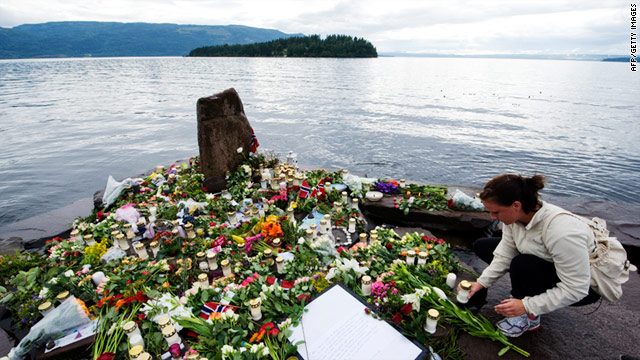
Echo chambers and terrorism: How an online ‘bubble’ of hate wounded an entire nation
It is Friday afternoon in Oslo (22 July 2011), the capital city of Norway. People are getting ready for the weekend: discussing dinner plans, packing their cars to leave for the mountains or the countryside, preparing to visit friends and family. It’s the middle of summer, but it’s a typical Norwegian summer: Not very warm and not very sunny. On the contrary – heavy rain clouds are looming over the streets of Oslo. The temperature hardly ever climbs above 15°C. Despite the grey, the wet and the cold, however, Oslo is warmed by a sense of excitement for the holidays

How “social media phenomena” influence social behavior: “pizzagate” conspiracy theory
Currently, in the IDare community, we are dealing with some phenomena which are occurring nowadays within social media and all kinds of online communication, and which are having strong psychological effects on people, especially on their way of thinking and acting. This article aims at showing one of the most concrete examples of the negative and serious consequences that these phenomena recently caused, leading some members of the social community to carry out extreme reactions. Starting from the beginning, we saw in the previous articles how fake news –it means, stories which are provably false- have an intensive “mental appeal”
Hyperleaders, politics in the social network era
The advent of the internet brings a significant shift in the leadership concept in modern democracies. With a big disillusion for the regular parties and politicians, the engagement of the electors and of the possible political followers and activists are more and more related to the social media parameters rather than the political contents that a certain leader can push. To make a point, the ideological battle is not ended, but regarding a smaller part of the audience than the majority which is nowadays is less guided by the commitment to a particular idea or party. Most people look at the
Filo Arabic fascism: “an enemy is a good as bread”
As we have seen in my (last article) illustrating Chomsky and Herman’s Propaganda Model theory, one of the filters media get sifted through is the “common enemy filter”. A recent study by the University of Kansas has found that the concept of an enemy helps to provide us with comfort when we are faced with uncertainty. Quoting; “Social psychologist Daniel Sullivan and colleagues describing the US government and economic structure as chaotic and disorderly, people were more willing to attribute greater influence to an enemy in their life. In a follow-up study, the researchers found that presenting people with information about

Do Unto Others
America’s mood was going through a period of change during the 60s. Televisions could be found by then in a growing number of American households. By then Norman Rockwell had been working as an illustrator for the Post for years, but USs fascination with celebrities meant that illustrations were being slowly replaced by portraits and photographs [1]. Maybe feeling that his job as an illustrator was not going to last forever thus feeling free to express his feelings, Rockwell began to explore social issues. He was a compassionate and liberal man, having traveled all his life and been welcomed wherever he

Citizen Journalism
Citizen journalism is a modern take on journalism that has at its basis the involvement of public citizens, who, “play an active role in the process of collecting, reporting, analyzing and disseminating news and information” [1]. The website We Media has been writing and researching the topic of citizen journalism since its early days. I have found some interesting material on their page that I would like to share. To quote: “According to Wacker, the world is moving faster than people can keep up with it. As a result, there are fewer common cultural references that can be agreed upon. Ideas, style,

The dark web
The Internet is not just what we see, it mostly is what we do not see at all. It is estimated that while what we call a clear web is just 6% of all the information that every day are running through the optic fiber. The rest is basically composed of secured communications, private databases, and servers, that are not listed and that is only accessible from their owners. This part of the web is called the deep web. The deep web, on the contrary of what is commonly thought, is not related to illegal activities, and comprehend whatever the

Tor controversial history
Tor Project is a collaborative and open-source software that was born with the aim to create secure and anonymous connections for all the users looking for an alternative, to the regular browsers such as Google Chrome, which showed a low degree of respect for the user information privacy. From its first public release in 2004, Tor was considered the Sacred Graal of internet privacy protection, a simple and free answer to the request of many users. Easy to use, and absolutely free, just download, install it and surf through a net where everyone should remain anonymous. The idea beyond Tor is