
Why Media Systems Matter: A Fact-Checking Study of UK Television News during the Coronavirus Pandemic This study focused on exploring the effectiveness of fact-checking in relation to a selected sample of UK audiences during the major covid-19 health crisis. Built on a six-week news study during the coronavirus outbreak, the research reached the conclusion that the UK’s impartial public service attitude created an environment where audiences were positively receptive to journalists’ fact-checking and countering misinformation. The study argued also that since audiences favored information’s scrutiny over yellow journalism, broadcasters were in a favorable position to propose fact-check claims without diminishing
Tag: Fake news

Fact-checking needs our readiness
Journal’s headlines need to capture our attention. Most of the time, they are specifically created to drag the reader into an emotional bubble, unleashing a strong response that leads us to be willing to engage further with the article. This mechanism particularly works when the news itself is considered a “hot” topic. For instance, this happened with the Covid-19 pandemic. At the beginning of 2020, Italian newspapers started writing articles preceded by sensationalistic headlines, creating a chaotic reaction in readers who desperately needed information about this previously unknown disease. All in a frantic search for information, but few able to identify

Deepfake
The term deep fake is commonly referred to as a video in which a person’s face has been convincingly replaced by a computer-generated face. Deepfakes came to prominence, with the spread of the internet, in 2017 through the online community called “deepfakes” on Reddit, whose members began sharing pornographic videos that appeared to feature famous female celebrities. Deep fakes are the most important and well-known form of what is called “synthetic media”: Images; Sounds; Videos; That appear to have been created by traditional means but which were actually built by complex software, which will be analyzed later in this article.
The outrageous history of Fake News
“The use of propaganda is ancient, but never before has there been the technology to so effectively disseminate it” (Posetti and Matthews, 2018). Fake news is not a new concept. It is the entire foundation upon which tabloid newspapers have grown, stories that shock and amaze people sell. False news has been propagated to various ends throughout history. Examples include Nazi anti-Semite propaganda, the catholic church has used fake news to scare and control populations (Lisbon Earthquake 1755, just one example) and across the United States in the 1800s as a justification for slavery. The problem in the modern-day is not
Why do we need fact-checking and watchdog
Citizens and Investigative Journalism: Why do we need a process to check the news? A world without any kind of “mediation”, like the one we live in, is pressing the growth and proliferation of self-referential and the desire to be the protagonist. Everywhere, in the digital world, we find data science wizards who, with great skill, flaunt their work as internet professionals and crossing tweets and news found online, randomly draw definitive conclusions with a strong narrative impact to fuel their business. The same is true for the new professions of the first twenty years of the year 2000: opinion

How deepfakes are shaping our online reality
A few years ago, the idea of fake was probably associated with the way in which people modelled their image in the real world. Today, the spread of the internet and the ability to easily create and post content makes the concept of “fake” much more related to the digital world. In particular, deepfakes are increasingly widespread and considered in the digital world, both for their possible positive uses and for those, unfortunately, manipulative. Deepfake is a new generation term, which indicates a particular technique for processing images from videos and photos. It is an algorithm based on artificial intelligence that is

Dismantling the Donald Trump Depiction of Fake news
The term ‘fake news’ is commonly expressed without much of a thought in 2021. The phenomenon of fake news, known by many as a political pawn by conservative Americans, is much more complex than the ordinary observer might expect. It is also much more dangerous. The term ‘fake news’ has many definitions. The oxford dictionary defines fake news as ‘news that conveys or incorporates false, fabricated, or deliberately misleading information, or that is characterised as or accused of doing so’. This is; however, an extremely simplistic definition as fake news encompasses many forms of information. Some types of fake news
Deception: what is fake news?
Mendacium pedes non habet. Gaio Giulio Phaedrus The Lie has no feet is an expression coined by Phaedrus, a storyteller of the 1st century, who never imagined that almost 2 thousand years later his concept of lies would be overturned, gutted and reinterpreted. But let’s start by telling the story of the fairy tale of Prometheus and his apprentice called “Deception”. The mythological fairy tale of Phaedrus tells that the master Prometheus, after forging a statue named “Truth”, was suddenly summoned by Jupiter and left his workshop in the care of his apprentice “Deception”. The latter eager to emulate the master,
A misleading truth called fake news
Fake news became a widespread term, especially after the blossoming of the internet and social media as privileged platforms to communicate, interact and acquire information. In order to give a clear understanding of fake news, I will start by reviewing some definitions taken from different online dictionaries. Cambridge dictionary defines fake news as: “false stories that appear to be news, spread on the internet or using other media, usually created to influence political views or as a joke”. Dictionary.com defines fake news as false news stories, often of a sensational nature, created to be widely shared or distributed for the purpose of

What is fake news?
Fabricated news reports and articles fool millions of readers on a daily basis. In most cases, the reports of this news can be easily distinguishable as fake due to the nature of the content in it. However, this is not always the case. In some scenarios, this news is not obvious to detect and can have serious consequences. Buzzfeed, an American news and entertainment site, found that American adults are able to detect fake news around 75% of the time (2016). An example of fake news having a more grave response is in 2016 when the Pakistani defence minister posted

The history of fake news
2000 years ago, the Roman Republic was facing a civil war between Octavian, the adopted son of Julius Caesar, and Mark Anthony, one of Caesar’s most trusted commanders. To win the war, Octavian knew he had to have the public on his side because if the people didn’t back him, he would not be a successful ruler. To solicit the sympathy and the support of Roman citizens Octavian launched a ‘fake news’ campaign against Mark Anthony. He claimed Anthony, who was having an affair with Cleopatra, the Egyptian Queen, didn’t respect traditional Roman values like respect and loyalty. He also added
Understanding fake news
“The age of post-truth stretches as far back as you care to look, there never has been a golden age of transparency”, said Steven Poole in one of its most recent pieces in The Guardian, illustrating the vast history behind the infamous expression (1). Fake news is nowadays hijacked and repurposed term but its semantics are widespread in both space and time. The first well-documented narrative mentioning published non-factual information dates back to 36 BC when Octavian, adoptive son of Julius Caesar, launched a campaign to downplay Marcus Antonius, Roman politician and general, claiming he didn’t respect traditional Roman values

History of fake news
Donald Trump, Cleopatra and her lover Marco Antonio, the monsters on the Moon: the minestrone (vegetables soup) of the Fake News. The point of departure and arrival of this article, but also of the society in which we live, is the importance of truth. No news or false news in a democracy can be extremely pernicious, since at the basis of the deep concept of democracy there is the sovereignty of the people and the relationship between government and people: this relationship not only takes place through information but is also shaped by the latter. As for the origin of the word

Tracing back: history of fake news
Source: ReKnew While some scholars have tried to identify the historical origins of fake news, resulting in various versions on the topic, the truth is that fake news has probably been around for as long as humans have lived in groups. In fact, before the invention of the press, stories were transferred from mouth to mouth, inevitably changing their connotation due to interpretation differences and understanding issues. On the other hand, groups normally present internal and external power dynamics which often lead to the creation of fake stories made up in order to discredit a member of the group or external rivals.
‘Fake News’ – How Disinformation is Used to Cause Harm
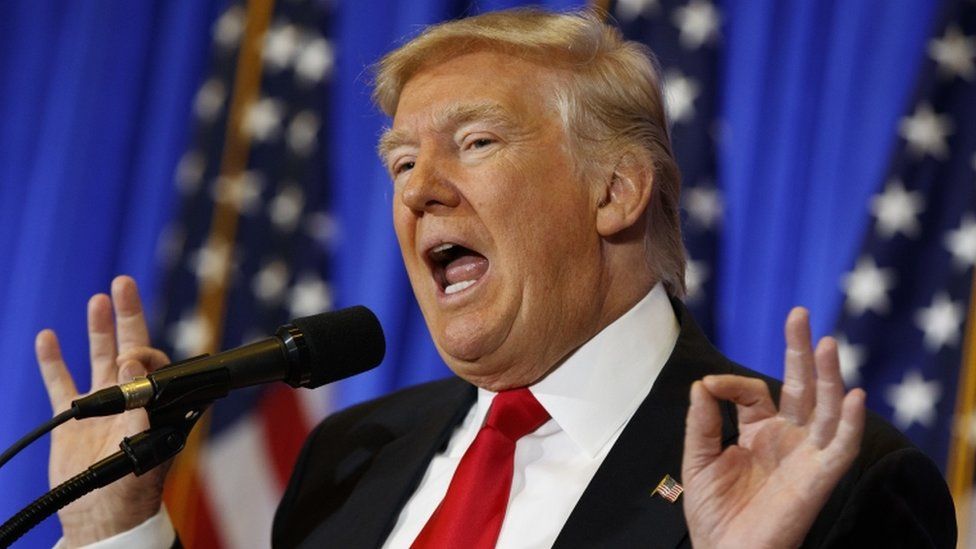
Fake news is characterised as ‘falsehoods that are deliberately manufactured and circulated with an intent to mislead’ (Claire Wardle 2017). The term ‘fake news’ rose to prominence during the 2016 U.S Presidential Election campaign when Donald Trump branded any news story he did not deem favourable ‘fake news’. This term began to be used by many conservative politicians and has spread throughout the world, increasingly being used to spread theories concerning the coronavirus pandemic. Richey argues that the fake news strategy is not to ‘establish falsehoods as true, but rather pollute political discourse such that news information consumers are led

The pathogenic dimension of capitalism: Bell Pottinger
The industry of Public Relations (PR) has a huge impact on how businesses, organizations and individuals communicate. Either through human capital or high-throughput technology, PR companies work towards better understanding their clients’ audiences so that they can be properly engaged to achieve specific business objectives (1). However, the ethical boundaries can usually become very narrow when dealing with sensitive matters such as economical and political affairs. That’s what happened with Bell Pottinger. Bell Pottinger was a British PR multinational, reputation management, and marketing company headquartered in London, United Kingdom. It was founded in 1998 by Lord Tim Bell, one of
A timeline for main fake news incidents and how it was handled
Fake news is nothing new. But, especially during the last presidential election in the United States in 2016, it has become something big. Here are some of the biggest fake news stories around the world over the past few years. “The War of the Worlds”, Orson Welles’ masterpiece, 1938 Before weighing on the most well known fake news in the past few years, let us go back to a significant event that may be considered as one of the first fake news of the contemporary era. During a cold evening of late October 1938, in the United States, an American
Fake news vs. democracy
Rumors, gossips, and falsehoods have always existed: do you remember when a very distant relative told your mother that he had seen you play hooky and it was not true? Or when your neighbors rumored that you used to smoke just because they had seen you hang out with a group of friends who used to smoke? So, in our daily life “fake news” – that in a general meaning are news that are not real, true – have always existed and always caused trouble at school, with our relatives or among friends; by the way, recently, fake news – “stories
Watch this Italian, killing thousands of people with his apparently delicious pizza!
Ok now that I have gained your attention, I have to admit that this article does not really contain the story of an Italian serial killer. Because there is no one, no one that I know for sure is killing thousands of people with pizza!. Anyway, this title is a typical example of click-baiting journalism, this is how fake news starts: a catchy headline, ready to be spread on the internet by people who will never read or verify its content. Fake news is a neologism to describe a well-known practice of bad journalism, which is over the centuries influenced our