The theme of politics is closely linked to the control of information and investigative journalism which aims to unmask disinformation. Three case studies will be considered in the following article: the first tells the story when Trump threatened to shut down Twitter in the United States after being exposed on a fakenews; the second, relatively recent, takes us 10 years back to the outbreak of the Arab revolutions, and will deal with the dissemination of information and the courage of people who armed with a revolutionary spirit will take the role of “investigative journalists” to control the flow of information;
Category: Fake news

Deepfake
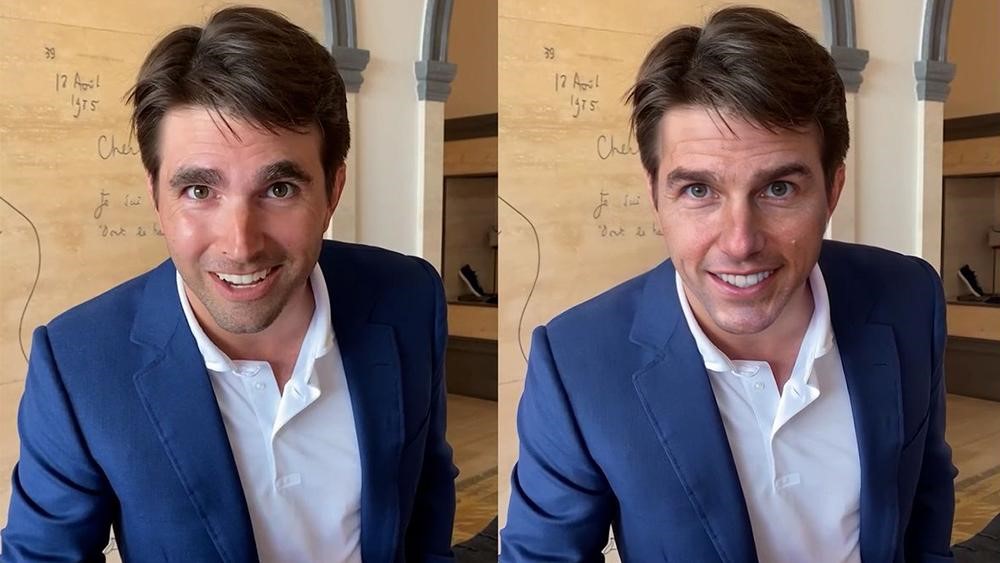
The term deep fake is commonly referred to as a video in which a person’s face has been convincingly replaced by a computer-generated face. Deepfakes came to prominence, with the spread of the internet, in 2017 through the online community called “deepfakes” on Reddit, whose members began sharing pornographic videos that appeared to feature famous female celebrities. Deep fakes are the most important and well-known form of what is called “synthetic media”: Images; Sounds; Videos; That appear to have been created by traditional means but which were actually built by complex software, which will be analyzed later in this article.

Gender Based Doxxing and Swatting
Introduction Doxxing is shorthand for ‘dropping documents’ and is ascribed to a phenomenon where a person’s private information is released publicly. Shockingly, a 2016 study by CIPHR found that, on average, 30% of Americans over the age of fifteen have experienced an invasion of privacy (Lenhart et al., 2016). This included ‘being hacked, having information about or images of the person exposed online without their permission, or, being impersonated’ (Lenhart et al., 2016). This study also found that 72% of American Internet users have witnessed online harassment or abuse (Lenhart et al., 2016). Online abuse and harassment have specific risks

The watchdog fleas
Watchdog journalists are known for their perseverance, patience, readiness to sacrifice, determination, and courage. Without them, all potentially great stories crumble, surfacing as phantom investigations, just glimmers of what could have been. The great history of journalistic investigation has always hinged on the journalist’s ability to withstand ubiquitous pressures both internal, placed by the institution where the journalist works, and external, imposed by the interests that the dissemination of the story compromises (1). This category of journalism reveals huge hidden interests and, like a “social geologist”, the watchdog journalist explores thoroughly the matter that constitutes society. Érick Neveu once wrote

The outrageous history of Fake News
“The use of propaganda is ancient, but never before has there been the technology to so effectively disseminate it” (Posetti and Matthews, 2018). Fake news is not a new concept. It is the entire foundation upon which tabloid newspapers have grown, stories that shock and amaze people sell. False news has been propagated to various ends throughout history. Examples include Nazi anti-Semite propaganda, the catholic church has used fake news to scare and control populations (Lisbon Earthquake 1755, just one example) and across the United States in the 1800s as a justification for slavery. The problem in the modern-day is not
Deepfake: The Information Boogeyman
The line between reality and simulation is becoming increasingly curtailed when it comes to media outlets. Speaking of false audiovisuals at a time in which we are still learning to deal with fake news is adding a seemingly innocuous reagent to a potentially harmful reactive mixture. I see two hypothetical polarised outcomes spanning from such a reaction. Either we obtain products of interest, such as computer-generated characters for cinematic purposes or voice clones to restore people’s voices when they lose them to disease, or we generate a catastrophic explosion by creating authentic vectors of disinformation. Deepfakes are the most well-known

Case study of fake news
Melania Trump discovers the love story between Michael Phelps and Hilary Clinton: all thanks to a secret chat on the Pokemon Go application. The story of fake news has evolved over time. Fake news, like a perfect Darwinian being, has adapted his body to the needs of nature and society. The natural selection goes from news handed down orally, to the invention of the press, to the spread of modern means of mass communication, up to the arrival of social media. Social media has drastically subverted the rules of evolution as if the dinosaurs had found themselves having to ice skate at
Privacy on the internet: the danger of doxing
The term doxing derives from the slang “dropping mix” or “dropping docs”, which was a revenge tactic used in hacker culture in the 1990s. Doxing is a type of cyber attack which aims to reveal and publicize the records of an individual, which were previously private or difficult to obtain. The process is simple: the conflict is moved from the internet to the real world by sharing personal information such as name, home address, employers, criminal record and other sensitive information that can put the victim at risk of losing their job or in immediate danger. The term doxing was heard for

Doxing
Doxing is an English term, derived from dox which is the abbreviation for documents, which as a neologism made its appearance online at the end of the first decade of 2000. However, the phenomenon has been present in the hacker community since the 90s. Historically, with the term doxing (also known as doxing) people used to refer to the act of de-anonymizing a person online, especially back in the days, when internet users preferred to use nicknames online media platforms to create their virtual persona, instead of their real names. Now, with the evolution of the habits of the utilization

Pseudo news… hoax news… fake news
Fake news is also known as “pseudo-news” or hoax news are news or in general, content that is supposed to be informative to readers and users, whether delivered via social media or offline. They are instead presented to the wider public without any proper contextualizing details and sources. They could be themselves fabricated or written without proper quotes and therefore deprived of verifiable sources to verify them. Nowadays, due to the proliferation of social media information and because of the staggering numbers of people worldwide that have access to technology assets and related information, fake news has been gaining more and more
Deception: what is fake news?
Mendacium pedes non habet. Gaio Giulio Phaedrus The Lie has no feet is an expression coined by Phaedrus, a storyteller of the 1st century, who never imagined that almost 2 thousand years later his concept of lies would be overturned, gutted and reinterpreted. But let’s start by telling the story of the fairy tale of Prometheus and his apprentice called “Deception”. The mythological fairy tale of Phaedrus tells that the master Prometheus, after forging a statue named “Truth”, was suddenly summoned by Jupiter and left his workshop in the care of his apprentice “Deception”. The latter eager to emulate the master,
A misleading truth called fake news
Fake news became a widespread term, especially after the blossoming of the internet and social media as privileged platforms to communicate, interact and acquire information. In order to give a clear understanding of fake news, I will start by reviewing some definitions taken from different online dictionaries. Cambridge dictionary defines fake news as: “false stories that appear to be news, spread on the internet or using other media, usually created to influence political views or as a joke”. Dictionary.com defines fake news as false news stories, often of a sensational nature, created to be widely shared or distributed for the purpose of

Contextual understanding of fake news
Is it reasonable to say it is almost impossible for a human being to not have heard about fake news in the current information paradigm? I think everyone would agree that it is more than legitimate to assume so. Although the term might mislead you, fake news refers to unquestionably accurate information prepared to support, preserve, and inform you about current global concerns. The phenomenon began to expand at an unmanageable rate on the internet and social networks in recent years. However, owing to its ubiquitous nature, people tend to regard this information as deceptive. This is problematic since these political,

What is fake news?
Fabricated news reports and articles fool millions of readers on a daily basis. In most cases, the reports of this news can be easily distinguishable as fake due to the nature of the content in it. However, this is not always the case. In some scenarios, this news is not obvious to detect and can have serious consequences. Buzzfeed, an American news and entertainment site, found that American adults are able to detect fake news around 75% of the time (2016). An example of fake news having a more grave response is in 2016 when the Pakistani defence minister posted

The history of fake news
2000 years ago, the Roman Republic was facing a civil war between Octavian, the adopted son of Julius Caesar, and Mark Anthony, one of Caesar’s most trusted commanders. To win the war, Octavian knew he had to have the public on his side because if the people didn’t back him, he would not be a successful ruler. To solicit the sympathy and the support of Roman citizens Octavian launched a ‘fake news’ campaign against Mark Anthony. He claimed Anthony, who was having an affair with Cleopatra, the Egyptian Queen, didn’t respect traditional Roman values like respect and loyalty. He also added
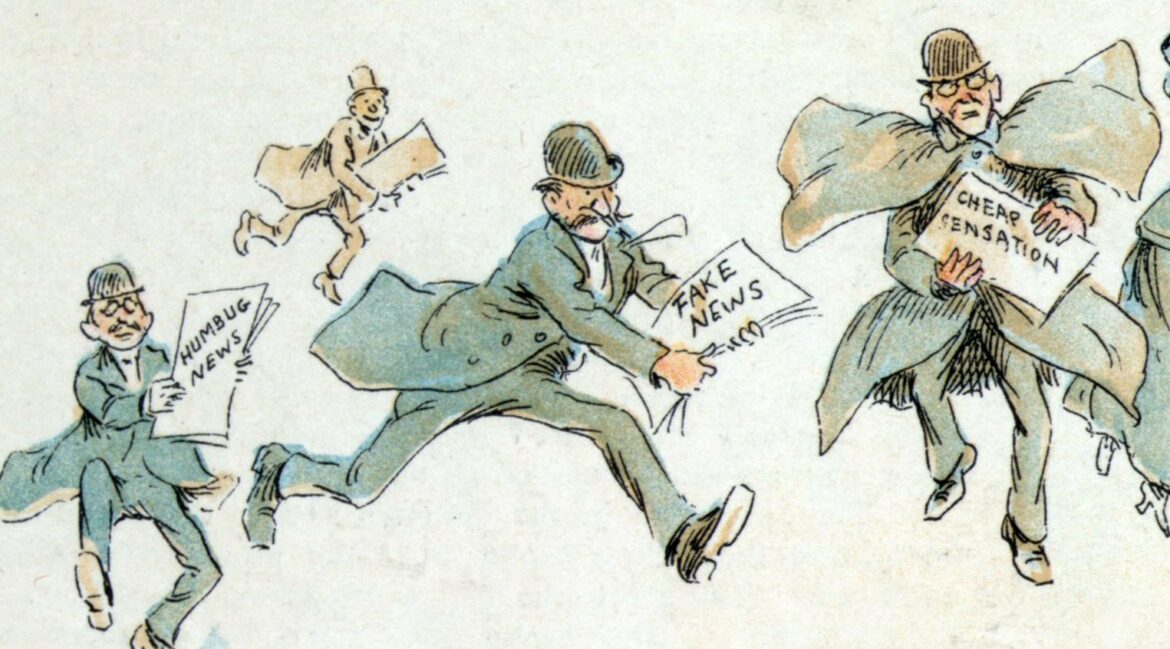
Understanding fake news
“The age of post-truth stretches as far back as you care to look, there never has been a golden age of transparency”, said Steven Poole in one of its most recent pieces in The Guardian, illustrating the vast history behind the infamous expression (1). Fake news is nowadays hijacked and repurposed term but its semantics are widespread in both space and time. The first well-documented narrative mentioning published non-factual information dates back to 36 BC when Octavian, adoptive son of Julius Caesar, launched a campaign to downplay Marcus Antonius, Roman politician and general, claiming he didn’t respect traditional Roman values

History of fake news
Donald Trump, Cleopatra and her lover Marco Antonio, the monsters on the Moon: the minestrone (vegetables soup) of the Fake News. The point of departure and arrival of this article, but also of the society in which we live, is the importance of truth. No news or false news in a democracy can be extremely pernicious, since at the basis of the deep concept of democracy there is the sovereignty of the people and the relationship between government and people: this relationship not only takes place through information but is also shaped by the latter. As for the origin of the word

Tracing back: history of fake news
Source: ReKnew While some scholars have tried to identify the historical origins of fake news, resulting in various versions on the topic, the truth is that fake news has probably been around for as long as humans have lived in groups. In fact, before the invention of the press, stories were transferred from mouth to mouth, inevitably changing their connotation due to interpretation differences and understanding issues. On the other hand, groups normally present internal and external power dynamics which often lead to the creation of fake stories made up in order to discredit a member of the group or external rivals.