The Social and Solidarity Economy in Jordan Introduction This knowledge paper comes in the context of the second dialogue as part of a track that aims to contribute to the formulation of a national learning model in Jordan that links the social and solidarity economy with the cultural and creative industries. This track is based on an understanding that knowledge building is achieved through a cumulative path that combines field visits, dialogues, networking, and the production of knowledge papers that document learning and establish an understanding emanating from the Jordanian reality. This dialogue focused on the question of spaces as
Author: idareteam

Creative Pathways call for action and commitment
The closing session of the forum was designed to bridge reflection and action, bringing together the moderators of the four thematic workshops to deliver concise syntheses of their discussions. These interventions provided a collective roadmap for activating resources and scaling the creative potential of the Jordan Valley. Each pathway presented both challenges and opportunities, framed as actionable ideas with the potential for immediate impact. Agritourism pathways were defined as holistic and authentic agricultural experiences, rooted in the Valley’s traditions and free from chemical inputs. Yet the sector faces persistent challenges: young people have limited access to full agritourism experiences, gaps

Digital resilience and the future pathways of creativity
This workshop explored the role of emerging digital tools in enhancing creative resilience and expanding opportunities for creative and cultural expression in the Jordan Valley. Stemming from the principle of meaningful participation, it examined how technologies such as artificial intelligence (AI), blockchain, and decentralised digital systems can contribute to heritage preservation, equality, and local empowerment. Central to the discussion was the guiding question: how can emerging digital tools strengthen creative resilience while creating new opportunities for cultural expression, identity-building, and inclusive participation in the Jordan Valley? The digital resilience in the Jordan Valley requires a dual approach: building skills and

Agritourism in the Jordan Valley: pathways for sustainable growth
The workshop on agritourism in the Jordan Valley brought together farmers, youth, experts, and development practitioners to reflect on the sector’s potential as a driver of cultural preservation and economic growth. The discussions positioned agritourism not merely as a tourism niche but as a broader creative and cultural practice, capable of reconnecting people with their land while creating new opportunities for innovation and livelihood. There is a strong consensus that agritourism is far more than an economic diversification strategy. It is a cultural project that revives heritage, reconnects people to their land, and empowers local communities to create opportunities on
The Food Systems Pathway: Culinary Creativity from the Jordan Valley
The dialogue brought together practitioners and community representatives to discuss how tourism and agriculture in the Jordan Valley can be reimagined as pathways that enhance resilience, creativity, and sustainable development. The discussions highlighted the importance of balancing the three pillars of sustainability: economic growth, environmental protection, and socio-cultural dynamics. It was emphasised that innovation in tourism cannot be achieved through repetitive or generic experiences such as conventional food tours, which reflect locality but lack authenticity. The real opportunity lies in building community-based immersive experiences that celebrate culture and identity. Promising examples included Bait Al Shoneh, which promotes permaculture and local

Culture, Art, and Identity-Driven Pathways in the Jordan Valley
The workshop opened with a reflection on the erosion of cultural and creative identity in Jordan and the need to reclaim and revitalise it. The success of the Royal Film Commission was cited as a powerful example of how Jordan has positioned itself on the global film industry map. Participants argued that similar models of cultural innovation and institution-building are urgently required in other sectors, such as food, design, and architecture, to unlock local potential and place Jordanian heritage within contemporary global narratives. Discussions underscored the importance of harnessing the unique cultural identity of the Jordan Valley as a foundation

Localising the Economic Modernisation Vision (JEMV): Creative and Cultural Industries (CCI) in the Jordan Valley
Exploring the role of Creative and Cultural Industries (CCI) in the Economic Modernisation Vision (EMV) and their potential for acting as an economic growth driver for local development in the Jordan Valley. To highlight opportunities and challenges in enabling and advancing socio-economic growth in the Jordan Valley through interventions that are focused on Creative and Cultural Industries, which are recognised as one of the main pillars of the Economic Modernisation Vision (EMV) as an economic driver. Available data on Jordan’s Creative and Cultural Industries (CCI) suggests a sector with measurable presence but limited scale. A 2018 WIPO-based assessment estimated that copyright

Decentralising Creative and Cultural Industries: the Jordan Valley as a model for Ecosystem Thinking
Mention the Jordan Valley in a conversation about Creative and Cultural Industries, their future and their promise, you are more likely to hear words of discouragement than possibility or potential. The region is still widely viewed as a peripheral, a place of unbearable heat, hardship, and underdevelopment. But, what if this very region (long marginalised and underestimated) holds the keys to reimagining Jordan’s Creative and Cultural future? What if the rhythms of its agricultural seasons, the depth of its living heritage, and the quiet resilience of its communities are not barriers but the foundation of a truly transformative ecosystem? To
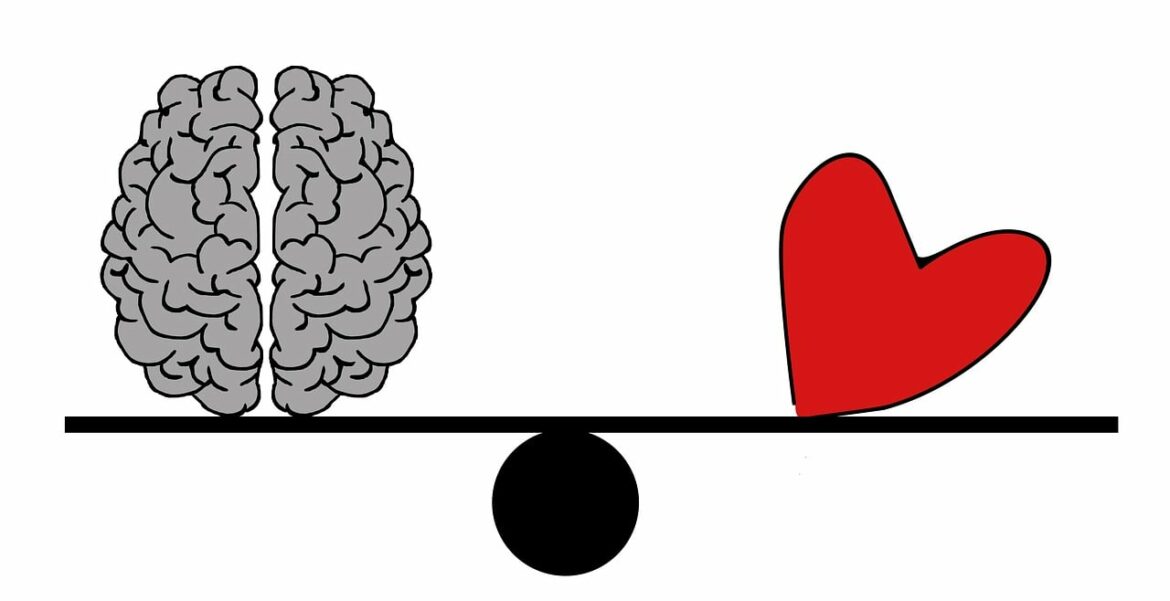
Self-sovereignty
A man who owns himself, and who settles his heart, mind and soul with wisdom, justice and light Rooting the knowledge model The knowledge paper and the discussions and contents it contains, should be rooted in our culture, emanating from our original intellectual and social system, not imported or quoted randomly. We need an intellectual model that emerges from the meanings of our lives and expresses our environment, our history, and our spiritual and social experiences. A model of thought that belongs to us, no stranger to us; a model that resembles us, understands us, and proceeds from our real

Edward Said’s ‘Orientalism’: Academic Scholarship, Policymaking, and Colonized Minds
In 1978, Palestinian-American scholar Edward Said changed the discourse around the West Asia and North Africa (WANA) region forever when he published his book ‘Orientalism’. In the book, Said assesses that ‘the West’ – in particular France, the UK and the US – view and discuss the WANA region in stigmatized, racist and supremacist terms, reflecting various forms of power ‘the West’ holds over ‘the East’. He describes Orientalism as a “style of thought based upon an ontological and epistemological distinction made between ‘the Orient’ and (most of the time) ‘the Occident’” (p.2). This distinction between East and West is a

Orientalism: A distorted perception of “the other”
“Arabs, for example, are thought of as camel-riding, terroristic, hook-nosed, venal lechers whose undeserved wealth is an affront to real civilization.” – Edward Said Orientalism is a built-in system or a method by which the West, not only socially constructed and actually produced the Orient, but controlled and managed it through a hegemony of power relations, working through the tropes, images and representation of literature, art, visual media, films and travel writing among other aspects of cultural and political appropriation. This extract is from the ground-breaking book of the Palestinian author Edward Said, entitled Orientalism. Said shows how Orientalism legitimized Western

At the East of West’s Ego
In 1978, the Palestinian-American professor and writer Edward Said published his work Orientalism, that sparked an everlasting debate on the topic. In his book, he analysed the English, French and American literary production about the so called “Oriental” cultures, defining Orientalism as the way West portrays especially the Middle East and North Africa region. Through the centuries, these areas have seen through a western perspective, creating and reinforcing stereotypes that saw those regions as something different, ‘other’. As Said states in his critic to the pome White Man’s Burden by Rudyard Kipling: Only an Occidental could speak of Orientals, for

The confirmation bias
“What we see depends mainly on what we look for” – John Lubbock The confirmation bias is a type of cognitive bias. It is the tendency to listen mostly to information that confirm our existing beliefs and reinforces the things we already think. For example, this happens when we prefer a TV news broadcaster to another just because we know it will not contradict our existing view, or on social media, when we only share articles that reinforce our existing beliefs. Confirmation biases influence the way we gather information, and how we interpret and recall them. For example, people who support

Do biased affect our decision making process?
“One way or another we are all biased, but still we have the modern cortical capacity to choose whether or not to let the harmful biases dictate our behaviour.” – Abhijit Naskar A cognitive bias is a subconscious error in thinking that leads you to misinterpret information from the world around you, and affects the rationality and accuracy of decisions and judgments. In the early 1970s, the scholars Amos Tversky and Daniel Kahneman introduced the term ‘cognitive bias’ to describe people’s systematic but apparently wrong patterns of responses to judgment and decision problems. In the past 35-year the term “cognitive bias”

Strengthened institutions, empowered people, and enhanced opportunities
The UN Jordan Sustainable Development Framework 2018-2022 When one studies political reports of Jordanian institutions like ministries, one sometimes stumbles upon acronyms starting with the letters U and N: UNESCO, UNICEF, UNDP. Often, these acronyms in governmental texts, reports and studies indicate UN involvement, with the capitalized U and N standing for the United Nations. But who are the United Nations and what are they doing in Jordan exactly? This article breaks down the role of the UN in the country and provides some examples of the important work they do. The United Nations is an international organization founded in 1945

What is Cognitive Bias?
As humans, sometimes we think irrationally. The ways we act, we treat other people, we make decisions may be influenced by some peculiar processes that happen in our brains, known as Cognitive Biases. “Cognitive biases are systematic cognitive dispositions or inclinations in human thinking and reasoning that often do not comply with the tenets of logic, probability reasoning, and plausibility. These intuitive and subconscious tendencies are at the basis of human judgment, decision making, and the resulting behavior” (Korteling; Toet, 2022: 610). In simple words, a bias is an involuntary error that makes us process information incorrectly, affecting the way we

How we judge people: fundamental attribution error in dept
What causes injustice and stereotypes? They can happen for countless factors, but what no one knows is that cognitive bias can be one of the causes and that our own brain can trick us into having stereotypes and misjudging people. Cognitive biases affect not only our decision-making processes but also our judgement about other people, therefore influencing the way we treat them. One bias that affects our judgement is the Fundamental attribution error (FAE), also known as correspondence bias or over attribution bias. By definition, FAE is the tendency to overestimate the degree to which an individual’s behavior is determined by his or

Non violent communication
“All violence is the result of people tricking themselves into believing that their pain derives from other people and that consequently those people deserve to be punished” Marshall B. Rosenberg Nonviolent Communication (NVC) is a process of communication created by psychologist Marshall Rosenberg. It is sometimes referred to as “compassionate communication.” Nonviolent communication is communication that maximizes liberty, enhances understanding of the relationship between feelings and needs, promotes equality, and creates compassion. NVC is a compilation of ideas about compassionate human behaviour, presented in order to fit with modern times. NVC can be used in every environment, from school to interpersonal

The art of living well
Every person pursues happiness in their life. But some people argue that happiness is just a fleeting feeling, and what we really want to pursue is well-being. These two words are everywhere: articles, essays, and self-help books. But what do these two words mean? Are they different? Are they the same? Is one of them more important than the other? Should one be a greater priority? Let’s take a look at their meanings to understand which one should be our aim in life. In psychology happiness is defined as “a state of emotional well-being that a person experiences either in a
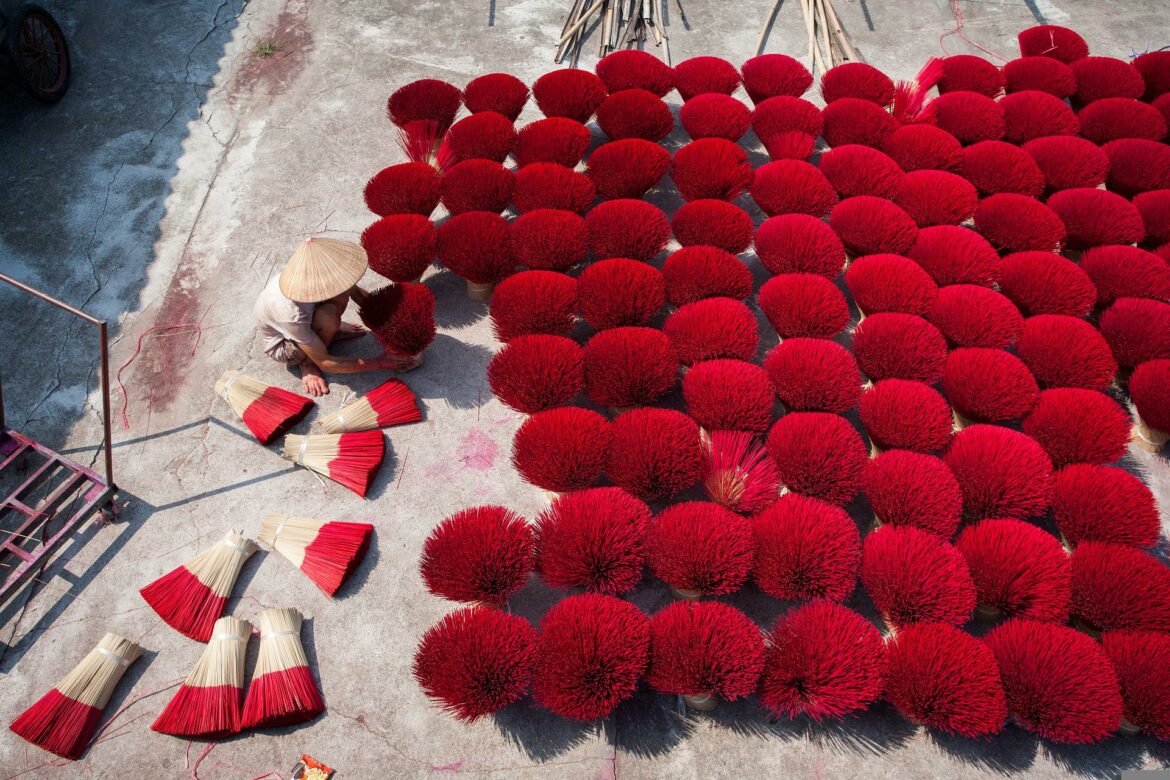
Culture is to be lived and to be learned
Very often we hear about celebrities, TV shows or, in general, people in the public eye being called out for Cultural Appropriation. It happens when people that belong to a dominant culture use traditional elements of a different culture in a non-respectful way, by taking it out of context and not researching enough, therefore staying ignorant about said culture. More precisely cultural appropriation is: “Speaking for others or representing them in fictional as well as legal, social, artistic, and political work [as] appropriate or proper, especially when individuals or groups with more social, economic, and political power perform this role

Cultural Appropriation in Times of Rising Islamophobia in France
In January, Vogue France faced heavy criticism from Social Media users after posting a picture of model and actress Julia Fox to their Instagram feed. In the picture, the celebrity wears an all-black look, including a black headscarf covering most of her hair. Initially, Vogue France titled the post “yes to the headscarf”. However, the caption attracted such negative attention from Social Media users that it was later edited, without Vogue France acknowledging the change. The post received more than 4,000 comments, unusual for a Vogue France post. In the comments, people decried the double standard of idolizing Western women for

Towards a Circular Water Sector
Water Scarcity Around the Globe: Reasons, Issues and Consequences Today, water scarcity – the limited access to much needed water – affects four billion people globally at least one month per year. While this number is alarming, by 2025, half of the world’s population could be living in areas affected by water scarcity, and by 2030, some 700 million people made refugees due to the phenomenon. The reasons for water scarcity are as diverse as its consequences. Collapsed infrastructure and distribution systems, contamination, conflict, and poor management of water resources by governments tie into factors related to the climate crisis. Around

What is media bias?
Over the past half decade, the legitimacy of the mainstream media has become a central theme of our political discourse. Some of this as of the result of Donald Trump’s repeated declarations that much of US media represents ‘fake news’. A term which is quickly gone from being the reserve a fringe conspiracy theorists to part of our everyday lexicon. This disdain for the mainstream media among some portions of the population has since spread to other countries. Supporters of Brexit in the UK, for example, have often levelled similar accusations of bias at the British press. Such critics have

What are the environmental challenges for Jordan?
The Middle East, like much of the world, is getting hotter, the already hot and dry climate is changing rapidly and it’s raining less. People can live without a lot of things, but no one can live without water. In terms of environmental issues, Jordan is one of the poorest in the world when it comes to water and climate change is making things worse. It’s a landlocked country with a small opening to the Red Sea, and a country that gets low rainfall. Other environmental challenges that the country is tracking includes the disappearing waters of the Dead Sea,

Appreciation or Appropriation?
Exploring the concept of cultural appropriation and its consequences “It’s about understanding the value and traditions of the symbols that are appropriated to ensure that their use is appropriate, and benefits those they belong to”, Sass Brown What is culture? the English anthropologist Edward Burnett Tylor, back in 1871, stated “culture is that complex whole which includes knowledge, belief, art, morals, law, custom, and any other capabilities and habits acquired by man as a member of society”. According to him, culture is not biologically inherited, but it is made of the things we learn and do when we belong to a
How Jordan Faces its Environmental Challenges
The climate crisis is leaving its marks in many parts of the world, and we are already facing many challenges related to it. Harsh winters, impossibly hot summers, wildfires, disastrous winds, and animals following different migration routes are all signals that our climate is already changing. And while every country in the world is to some extent facing some of these effects, many countries have harder challenges than others. This might be because of different reasons, such as position, the configuration of the land, population, government involvement, social awareness, and many others. Despite its small size, Jordan has quite a large
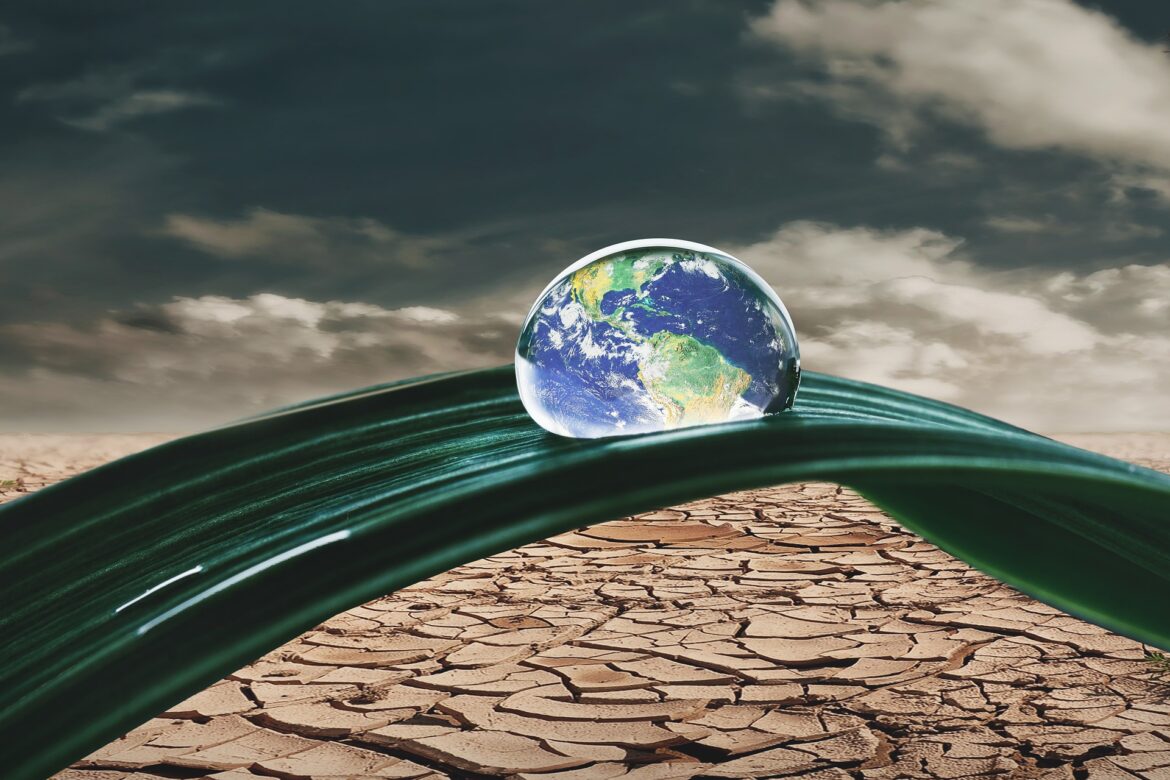
Reviving Al Hima: Combating Desertification in Jordan through Traditional Rangeland Management
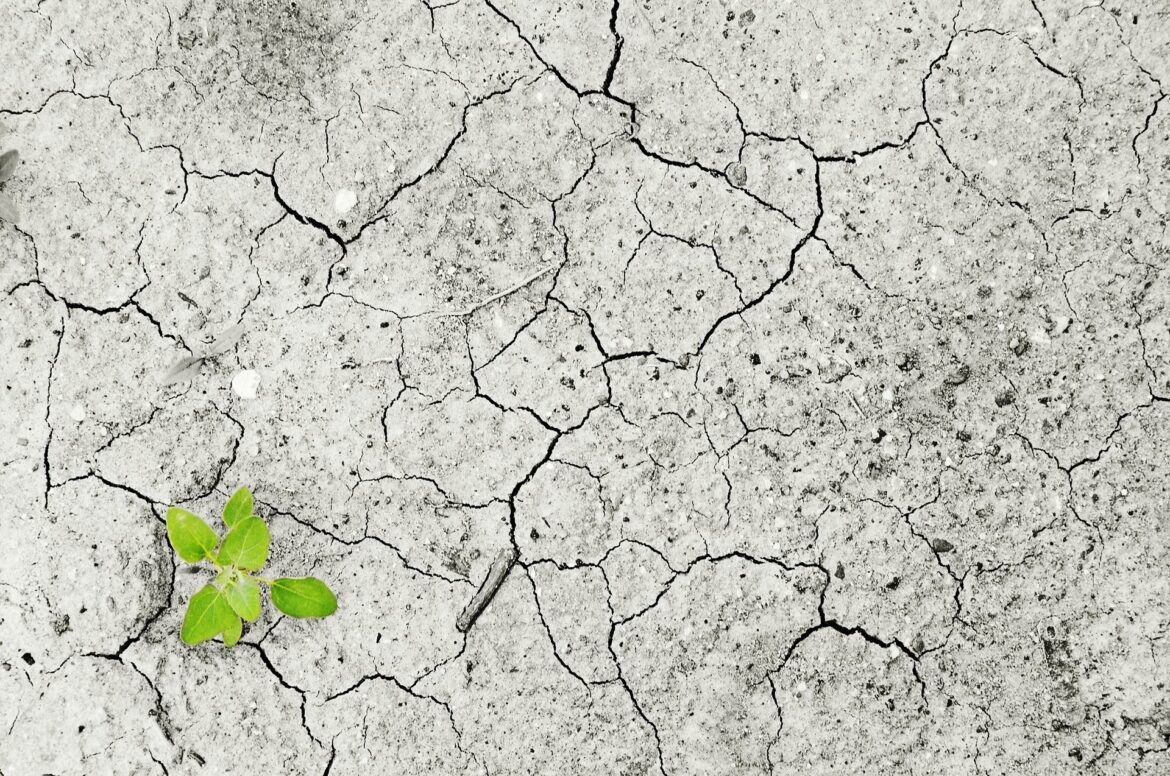
Drylands – arid, semi-arid and dry sub-humid areas – cover 46.2 % of the global land and are home to 3 billion people. They result from both human activities and climate variations, and are prone to desertification. Desertification describes the total land degradation of drylands. Global desertification is rising, affecting 9.2 % of all drylands, or 500 million people, in 2015. The highest number of communities affected can be found in South and East Asia, the Sahara region, and the Middle East. Jordan is a case in point. Due to little rainfall, deforestation, soil erosion, land mismanagement, climate change, droughts, and
There is no Planet B
“We do not inherit the earth from our ancestors; we borrow it from our children”, Native American Proverb The picture above dates back to the 15th of March 2019 and it shows an inflatable planet Earth bouncing around the crowd during a climate-change-awareness demonstration in Sydney. On that day, thousands of environmentally concerned students in 80 countries held a “Fridays for Future” strike, marching through the streets with powerful signs. Since the beginning of 2019, large numbers of protests against government inaction on issues of climate change have been taking place in cities worldwide. The movements were largely student-led and
The damaging impact of blind trust in pictures?
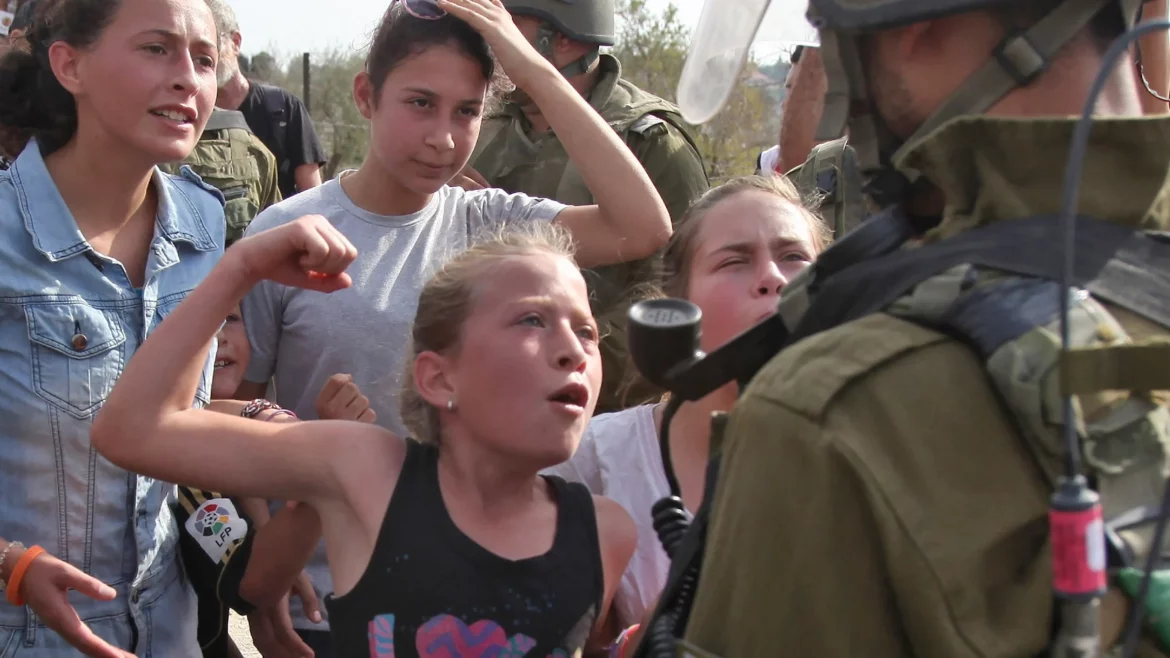
It has long been hailed that “a picture is worth a thousand words” and in February this year, there was no finer example of this when the video of Ahed Tamimi from 2012 appeared on Tik-Tok. The video, which sees Tamimi a blonde-haired Palestinian girl standing up to an Israeli soldier, was wrongly circulated as an image of a Ukrainian girl confronting a Russian soldier. This fake news was quickly called out, but it did highlight the double standards towards sympathy and support to victims of war. The video which went viral on TikTok with over 12 million views and
Yet another Call for Justice: Context in a Picture
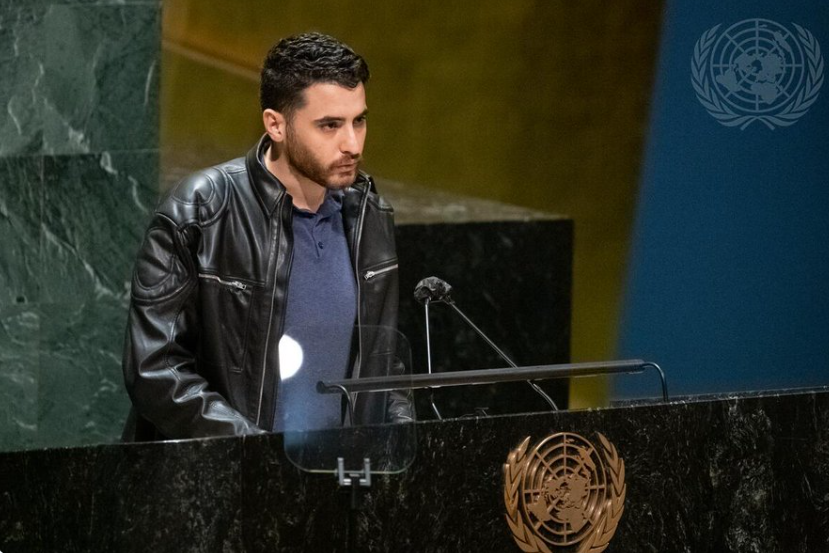
The image: Muhammed El-Kurd at the UN General Assembly, United Nations Photo, 29 Nov 2021. A young man holds a speech. At first sight, this is all we see in the picture placed in front of us. If we were to see it without context, we would not know that the young man in the picture is Mohammed El-Kurd, a Palestinian writer and activist, who rose to fame after defending his family in Sheikh Jarrah, East Jerusalem, from illegal eviction by the Israeli occupation. In May 2021, the local community of the Sheikh Jarrah neighborhood, defending their homes, sparked global